Introduction
e natural world is full of surprises, but few are as fascinating as Spheniscus mendiculus, commonly known as the Galápagos penguin. Unlike its cold-climate relatives, this unique penguin species lives near the equator, surviving in a warm environment that seems completely unsuitable for penguins. Its existence challenges everything we usually associate with these flightless birds.
This 100% unique and in-depth article explores Spheniscus mendiculus in detail, covering its taxonomy, habitat, physical adaptations, behavior, diet, breeding patterns, conservation status, and its importance to global biodiversity. Through this journey, you will understand why the Galápagos penguin is considered one of nature’s most extraordinary evolutionary achievements.
What Is Spheniscus mendiculus?
Spheniscus mendiculus is the scientific name of the Galápagos penguin, the only penguin species that lives naturally north of the equator. It belongs to the genus Spheniscus, which also includes African, Humboldt, and Magellanic penguins.
This species is endemic to the Galápagos Islands of Ecuador, meaning it is found nowhere else on Earth. Its limited range makes it both scientifically valuable and highly vulnerable to environmental changes.
Taxonomy and Scientific Classification of Spheniscus mendiculus
Understanding the classification of Spheniscus mendiculus helps place it within the broader penguin family.
- Kingdom: Animalia
- Phylum: Chordata
- Class: Aves
- Order: Sphenisciformes
- Family: Spheniscidae
- Genus: Spheniscus
- Species: Spheniscus mendiculus
The genus Spheniscus is characterized by penguins that typically inhabit temperate regions, making the equatorial adaptation of S. mendiculus particularly remarkable.
Unique Habitat of Spheniscus mendiculus
Life Near the Equator
Unlike most penguins that thrive in cold Antarctic or sub-Antarctic climates, Spheniscus mendiculus lives in a tropical environment. It primarily inhabits the western Galápagos Islands, especially Isabela and Fernandina.
The Role of Ocean Currents
The survival of the Galápagos penguin depends heavily on cold ocean currents such as the Humboldt and Cromwell Currents. These currents bring nutrient-rich, cold water to the surface, supporting abundant fish populations that penguins rely on for food.
Coastal Living
Spheniscus mendiculus nests along rocky shorelines, lava crevices, and coastal caves. These areas provide shade and protection from predators and intense sunlight.
Physical Characteristics of Spheniscus mendiculus
Size and Weight
The Galápagos penguin is the smallest penguin species in the Northern Hemisphere. Adults typically measure about 48–53 centimeters in height and weigh between 1.5 to 2.5 kilograms.
Plumage and Coloration
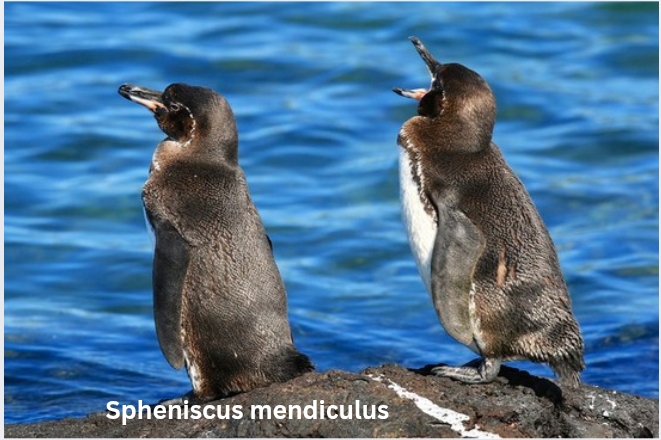
Its plumage features a black back and white belly, with a distinctive black band across the chest. A white stripe runs from the eye around the ear patch, giving the species a recognizable facial pattern.
Adaptations for Heat Regulation
One of the most important features of is its ability to cope with heat:
- Sparse feathers on parts of the body help release heat
- Flippers are extended away from the body to cool down
- Panting helps regulate body temperature
These adaptations are critical for survival in an equatorial climate.
Behavior and Daily Life of Spheniscus mendiculus
Social Structure
Galápagos penguins are social animals and often live in small colonies. Unlike larger penguin species, their groups are relatively scattered due to limited nesting sites.
Swimming and Diving
Spheniscus mendiculus is an excellent swimmer. It can dive up to 15 meters in search of food and uses its flippers like wings to glide effortlessly through water.
Vocal Communication
This species uses a variety of calls to communicate with mates and chicks. Vocalizations play a key role in maintaining pair bonds and identifying individuals in crowded nesting areas.
Diet and Feeding Habits of Spheniscus mendiculus
Primary Food Sources
The diet of Spheniscus mendiculus mainly consists of:
- Small schooling fish
- Sardines
- Anchovies
- Crustaceans
Hunting Strategy
These penguins hunt in shallow waters close to shore, often feeding during cooler parts of the day. Their feeding success is closely linked to ocean productivity.
Impact of Food Availability
When food is scarce due to changes in ocean currents, penguins may skip breeding seasons or experience higher chick mortality.
Breeding and Reproduction of Spheniscus mendiculus
Flexible Breeding Season
Unlike many penguins with strict breeding seasons, breeds opportunistically. Reproduction occurs when food availability is high, which is directly influenced by ocean conditions.
Nesting Behavior
Nests are built in shaded lava crevices or caves to protect eggs from heat and predators. This nesting strategy is crucial in the tropical environment.
Parental Care
Both parents share responsibilities, including:
- Incubating eggs
- Feeding chicks
- Protecting the nest
Chicks are dependent on their parents for several weeks before fledging.
Predators and Natural Threats
Natural Predators
Predators of Spheniscus mendiculus include:
- Sharks (while swimming)
- Snakes
- Birds of prey targeting eggs and chicks
Environmental Challenges
Natural events such as El Niño can significantly reduce food availability, leading to population declines.
Conservation Status of Spheniscus mendiculus
Current Classification
The Galápagos penguin is classified as Endangered, making it one of the most threatened penguin species in the world.
Major Threats
Key threats include:
- Climate change
- El Niño events
- Habitat disturbance
- Introduced predators such as cats and rats
- Overfishing in surrounding waters
Population Size
The total population of is small, with estimates often below 2,000 individuals, making conservation efforts critical.
Conservation Efforts to Protect Spheniscus mendiculus
Protected Areas
Most Galápagos penguin habitats lie within protected national park and marine reserve boundaries, offering some level of protection.
Predator Control Programs
Efforts to manage invasive species have helped improve chick survival rates.
Scientific Monitoring
Researchers closely monitor population trends, breeding success, and ocean conditions to respond quickly to threats.
Community Involvement
Local communities and authorities work together to promote responsible tourism and environmental awareness.
Importance of Spheniscus mendiculus to Biodiversity
Indicator Species
The Galápagos penguin serves as an indicator of ocean health. Changes in its population often signal broader environmental issues.
Role in the Ecosystem
As a predator of small fish, it helps maintain balance in marine food webs.
Evolutionary Significance
Spheniscus mendiculus offers valuable insights into evolution, adaptation, and survival under extreme conditions.
Climate Change and the Future of Spheniscus mendiculus
Rising Ocean Temperatures
Warmer waters reduce nutrient availability, leading to food shortages.
Increased Frequency of El Niño
More frequent and intense El Niño events pose a serious risk to breeding success.
Adaptation Limits
While this species is highly adaptable, rapid environmental changes may exceed its ability to cope.
How Humans Can Help Protect Spheniscus mendiculus
Support Conservation Programs
Supporting conservation initiatives helps fund research and habitat protection.
Responsible Tourism
Visitors to the Galápagos can reduce their impact by following guidelines and respecting wildlife.
Global Climate Action
Reducing carbon emissions contributes to long-term protection of marine ecosystems.
Conclusion: Why Spheniscus mendiculus Deserves Global Attention
more than just a rare penguin; it is a symbol of resilience, adaptation, and the delicate balance of nature. Living in an environment once thought impossible for penguins, it demonstrates how life can thrive under extraordinary conditions.
However, its survival is far from guaranteed. Climate change, human activity, and environmental instability pose ongoing threats. Protecting the Galápagos penguin means protecting the oceans, ecosystems, and natural heritage of our planet.
By learning about and supporting conservation efforts, we take an important step toward ensuring that this incredible species continues to exist for future generations.