Introduction
asiatic elephant vs african elephant are among the most remarkable animals on Earth, admired for their intelligence, emotional depth, and immense size. Yet, when people talk about elephants, they often assume they are all the same. In reality, there are important differences between the Asiatic elephant and the African elephant. These two species evolved in different environments and developed unique physical traits, behaviors, and lifestyles.
This in-depth article explores Asiatic elephant vs African elephant in detail, covering their appearance, habitat, behavior, intelligence, diet, relationship with humans, and conservation status. By the end, you’ll clearly understand how these two gentle giants differ and why protecting both is crucial.
Understanding the Asiatic and African Elephant Species
The Asiatic elephant (Elephas maximus) is native to South and Southeast Asia. It has several subspecies found in countries like India, Sri Lanka, Thailand, Myanmar, and parts of Indonesia.
The African elephant belongs to the genus Loxodonta and includes two main species: the African savanna elephant and the African forest elephant. These elephants inhabit various regions across sub-Saharan Africa.
Although they share a common ancestor, millions of years of evolution in different environments led to noticeable differences between the Asiatic elephant and the African elephant.
Overall Size and Body Build
One of the most obvious differences in Asiatic elephant vs African elephant is size.
African elephants are the largest land animals on the planet. Adult males can reach heights of over 3.5 meters at the shoulder and weigh up to 6,000 kilograms or more. Their bodies are tall, wide, and heavily built.
Asiatic elephants are slightly smaller and more compact. Adult males usually stand between 2.7 and 3 meters tall and weigh around 3,000 to 5,000 kilograms. Their bodies appear more rounded and less towering than their African counterparts.
This difference in size is linked to habitat and food availability, with Africa’s open savannas supporting larger body structures.
Ear Size and Shape Differences
The ears are one of the easiest ways to distinguish an Asiatic elephant from an African elephant.
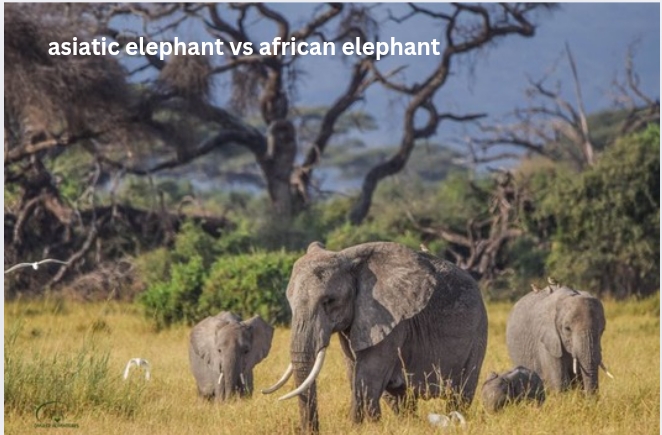
African elephants have extremely large ears shaped somewhat like the African continent. These massive ears play a critical role in cooling the body. Blood vessels in the ears release heat, which is essential for survival in Africa’s hot climate.
Asiatic elephants have much smaller, rounded ears. Since many Asiatic elephants live in forested or shaded environments, they do not require such large ears for temperature regulation.
Head Shape and Forehead Structure
Another key difference in Asiatic elephant vs African elephant lies in the shape of the head.
Asiatic elephants have a distinct twin-domed head with a noticeable indentation in the middle of the forehead. This gives their head a more structured and angular appearance.
African elephants have a single, smooth dome-shaped head without a central dip. Their skull structure is broader and flatter, contributing to their massive appearance.
Tusks: Presence and Size
Tusks are elongated incisors and serve many purposes, including digging, stripping bark, defense, and social interaction.
In African elephants, both males and females usually grow tusks, although females tend to have smaller ones. These tusks can grow very large and are one of the most iconic features of African elephants.
In Asiatic elephants, tusks are mainly found in males. Even then, not all males have large tusks—some have small tusks known as “tushes,” and many are completely tuskless. Female Asiatic elephants rarely have tusks.
This difference has had serious consequences, as African elephants have been heavily targeted by poachers due to the widespread presence of tusks.
Trunk Tip Structure
The trunk is one of the most versatile organs in the animal kingdom, used for breathing, smelling, touching, drinking, and grasping objects.
African elephants have two finger-like extensions at the tip of the trunk—one on the top and one on the bottom. This allows them to grasp small objects with greater precision.
Asiatic elephants have one finger-like extension at the tip of the trunk. They compensate by wrapping the trunk around objects or pressing items against surfaces to pick them up.
Skin Texture and Wrinkling
Skin texture is another important point in the Asiatic elephant vs African elephant comparison.
African elephants have deeply wrinkled skin. These wrinkles help trap moisture and mud, which keeps the elephant cool and protects against sunburn and parasites.
Asiatic elephants have smoother skin with fewer and shallower wrinkles. Their skin is often darker in some areas and lighter in others, with depigmented patches visible on the ears, trunk, and face.
Habitat and Geographic Distribution
African elephants are found across a wide range of habitats in sub-Saharan Africa, including savannas, grasslands, deserts, forests, and wetlands. Their adaptability allows them to thrive in diverse environments.
Asiatic elephants are primarily found in forested regions, grasslands, and river valleys of Asia. They depend heavily on dense vegetation and access to water, which limits their range.
Habitat loss affects both species, but Asiatic elephants are more restricted geographically, making them especially vulnerable.
Diet and Feeding Behavior
Both Asiatic and African elephants are herbivores, but their diets vary depending on habitat.
African elephants eat grasses, leaves, bark, fruits, and roots. They can consume up to 300 kilograms of vegetation per day, spending most of their time feeding.
Asiatic elephants rely more on grasses, bamboo, palm leaves, fruits, and agricultural crops. This often leads to conflict with farmers, especially in regions where natural habitats overlap with farmland.
Both species play a vital role in shaping ecosystems by dispersing seeds and clearing vegetation.
Social Structure and Herd Dynamics
Elephants are highly social animals with complex family structures.
Both Asiatic and African elephants live in matriarchal herds, led by the oldest and most experienced female. These herds consist of related females and their calves.
African elephant herds are generally larger and more flexible, sometimes merging into massive groups during migration or in areas with abundant resources.
Asiatic elephant herds are usually smaller and more tightly bonded, especially in forested environments where large groups are harder to maintain.
Adult males of both species typically live alone or form temporary bachelor groups.
Intelligence and Emotional Capacity
When comparing Asiatic elephant vs African elephant, intelligence is a shared trait rather than a difference.
Both species demonstrate exceptional cognitive abilities, including problem-solving, learning, memory, empathy, and self-awareness. Elephants have been observed mourning their dead, helping injured companions, and recognizing themselves in mirrors.
Their communication system is highly advanced, involving vocal sounds, body language, and low-frequency infrasound that can travel long distances.
Relationship with Humans
The relationship between elephants and humans differs greatly between Asia and Africa.
Asiatic elephants have been domesticated for thousands of years. They have been used for transportation, logging, agriculture, religious ceremonies, and royal processions. Despite domestication, they are never truly tame and require expert care.
African elephants have rarely been domesticated due to their size, strength, and temperament. Human interaction has mostly involved coexistence, tourism, or conflict.
These historical relationships shape how elephants are perceived and treated in different cultures.
Cultural and Religious Significance
Asiatic elephants hold deep cultural and religious importance, especially in Hinduism and Buddhism. They are associated with wisdom, power, and good fortune, symbolized by the deity Ganesha.
African elephants are powerful cultural symbols in many African societies, representing strength, leadership, memory, and unity. They also play a central role in wildlife tourism, contributing significantly to local economies.
Lifespan and Reproduction
Both Asiatic and African elephants have long lifespans, typically living between 60 and 70 years in the wild.
Elephants have the longest gestation period of any land animal—about 22 months. Calves are born highly dependent and remain under maternal care for several years.
Slow reproduction rates mean that population recovery takes a long time, making conservation efforts especially important.
Conservation Status and Threats
Both species face serious threats, but the challenges differ.
African elephants are primarily threatened by poaching for ivory and habitat loss. Conservation efforts have helped stabilize populations in some areas, but illegal ivory trade remains a major concern.
Asiatic elephants face severe habitat fragmentation, human-elephant conflict, and limited genetic diversity. Rapid urbanization and agricultural expansion have drastically reduced their natural range.
Asiatic elephants are classified as Endangered, while African elephants are classified as Vulnerable or Endangered, depending on the species.
Key Differences at a Glance
When comparing Asiatic elephant vs African elephant, the main differences include:
- African elephants are larger and heavier
- African elephants have much larger ears
- Tusks are common in both sexes of African elephants
- Asiatic elephants have twin-domed heads
- African elephants have two trunk fingers, Asiatic have one
- Asiatic elephants have a longer history of domestication
Despite these differences, both species share remarkable intelligence and emotional depth.
Conclusion: Asiatic Elephant vs African Elephant
The comparison of Asiatic elephant vs African elephant reveals how evolution, environment, and human interaction shape species in unique ways. African elephants dominate open landscapes with their massive size and large ears, while Asiatic elephants thrive in forested regions with compact builds and close-knit social groups.
Both elephants are irreplaceable treasures of the natural world. Protecting them requires global cooperation, habitat conservation, and respectful coexistence with humans. By understanding their differences and appreciating their similarities, we take an important step toward ensuring that these magnificent animals continue to roam the Earth for generations to come.